Electricity Network Operators are soon to have enhanced land rights. What will this mean for clean energy projects, developers and landowners?

By Aliki Zeri, Anna Phillips, Kutahya Cherry, Beth Kingsley-Ross, Rose Westwood
13 May 2026 | 4 minute read
On 21 April 2026, the Department for Energy Security and Net Zero (DESNZ) published its response to the July 2025 consultation on reforming land rights and consents processes for electricity network infrastructure.
The government’s proposals materially strengthen the statutory powers available to electricity network operators. The measures aim to reduce planning friction, improve access and land rights, and limit delays caused by consent processes and landowner negotiations, enabling network operators to deliver infrastructure more quickly and with greater certainty.
For renewable energy developers, whose projects are dependent on timely grid connection and reinforcement, and for landowners whose land is affected by the electricity infrastructure, these reforms are significant.
Key enhancements to network operators’ rights
The response confirms a package of measures designed to streamline planning, access and land rights for electricity infrastructure, including:
- Expanded permitted development rights for substations
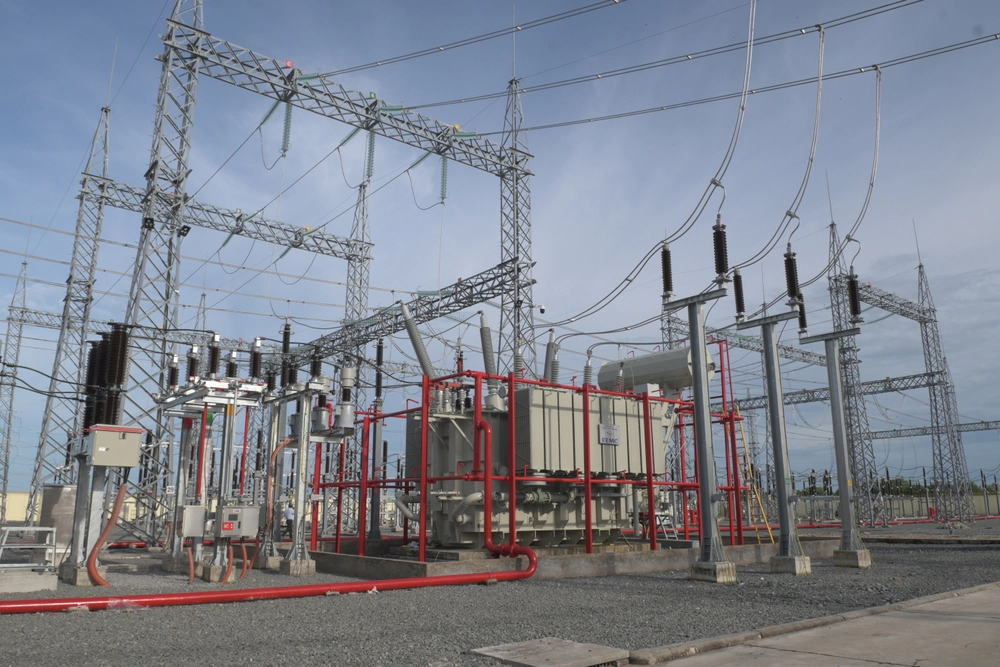
Existing permitted development rights will be extended to cover larger substations, up to 45 cubic metres (subject to a 3-metre height restriction and not being within 5 metres of any dwelling). The permitted development rights apply to development by both network operators and licence holders under section 6 of the Electricity Act (including generation, distribution, transmission and supplier licence holders). - Necessary wayleaves
The standard term of necessary wayleaves will be significantly extended from 15 years to 40 years, providing much greater long-term certainty for network assets. The government commentary makes it clear that operators must first seek to agree voluntary land rights, and necessary wayleaves will only be considered where voluntary agreement cannot be reached. - Tree lopping and felling
Responsibility for cutting back and felling trees and vegetation which encroaches on the clearance required for overhead lines will now sit with the statutory undertaker, rather than the landowner. However, there will be provision for landowner to carry out these works, where agreed with the operator to the extent it is safe to do so. - Enhanced statutory access rights
Network operators will benefit from clearer and broader rights of access over third-party land, including enhanced powers to install, inspect, maintain, and repair apparatus in, on, under or over land. It is made clear that provisions relating to making good or paying compensation for any damage caused while exercising access rights also apply to access over third-party land. - Nationally Significant Infrastructure Projects (NSIP) thresholds
The reforms will remove 132 kV wooden pole lines from the scope of the NSIP regime and will increase the distance threshold for overhead lines to fall within NSIP classification from 2km to 15km. Revised thresholds will allow the NSIP regime to focus on strategic network infrastructure and allow smaller projects which are currently captured to instead be dealt with under the Section 37 consent regime. - Section 37 consent reforms
Section 37 of the Electricity Act requires Secretary of State consent to works to install or upgrade overhead lines with voltage over 20kV. The reforms will introduce additional exemptions so that consent will no longer be required for certain lower impact overhead line works, for example increases to the height of existing pole supports where there is no change in voltage, and upgrades from single-phase to three-phase overhead lines where the voltage does not exceed 11kV.
Why this matters for clean energy developers
The proposals collectively aim to accelerate and de‑risk the delivery of grid infrastructure against the background of grid reform, particularly following the outcomes of the Gate 2 to Whole Queue (GT2WQ) process.
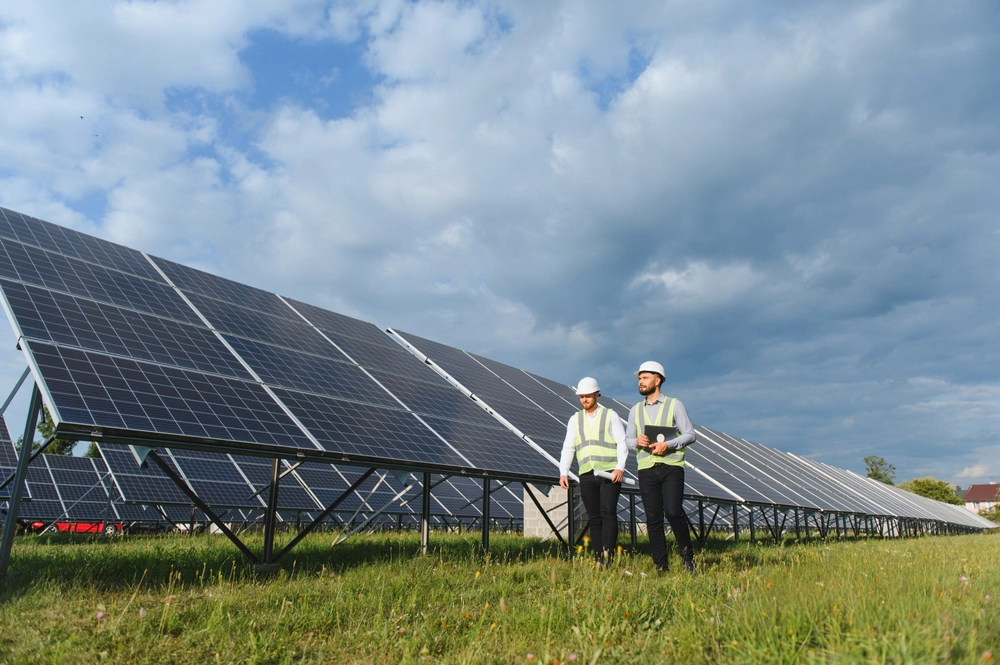
The extension of statutory access rights lowers the risk of essential installation, maintenance, or upgrade works being delayed by access disputes, while changes to consent regimes, permitted development rights and NSIP reforms are intended to minimise planning related delays for strategic grid infrastructure projects. In addition, longer-duration wayleaves provide greater long-term certainty that grid infrastructure can remain in place for the full operational life of renewable assets. This enhanced certainty will support developers in achieving their connection dates and help unlock renewable capacity at the pace required for the transition to clean energy.
However, the consultation response makes clear that the government is seeking to balance the need for growth with appropriate protections for landowners. There remains a strong expectation that developers and operators will engage constructively with landowners to reach agreement, particularly as network operators are reluctant to overuse their statutory powers, meaning that early and proactive engagement continues to be critical.
Impact on rural and charitable landowners
The government’s response confirms a clear policy direction: accelerating electricity network delivery is now a national infrastructure priority, supported by a more streamlined and predictable consents and land access regime. At the same time, the reforms seek to retain proportionate safeguards for landowners, meaning that effective delivery will continue to depend on early engagement, transparent dialogue and well‑structured agreements that address land use, operational impacts and long‑term stewardship.
For rural and charitable landowners, the changes emphasise the value of responding constructively to any proposals for renewable energy projects, but with a clear understanding of the evolving framework. Early involvement can still provide meaningful opportunities to influence routing, construction methods and mitigation, even where statutory powers may ultimately be available. Trustees and estate managers will also need to continue balancing cooperation with their fiduciary and stewardship obligations, particularly where land has environmental, heritage or public‑facing significance.
More broadly, the reforms are likely to change the dynamics of engagement across the sector, shifting the focus from whether infrastructure can be delivered to how it is delivered and how impacts, risks and value are managed between stakeholders. Developers, operators and landowners who engage early and on an informed basis are likely to achieve more efficient, durable and less contentious outcomes. In this context, taking early advice from legal, surveying and environmental professionals will remain crucial in ensuring proposals are shaped appropriately and landowner interests are properly protected.
How can Foot Anstey help?
Our Energy & Infrastructure, Agricultural and Charity sector teams have extensive experience advising landowner and developer clients.
Please get in touch with our relevant teams to find out more.
Get in touch

Partner
Head of Energy & Infrastructure | Projects, Infrastructure & Construction | Real Estate
Bristol










Partner
Energy & Infrastructure | Projects, Infrastructure & Construction | Real Estate
Bristol

Partner
Energy & Infrastructure | Projects, Infrastructure & Construction | Real Estate
Southampton

Partner
Risk Advisory & Regulatory | Contentious Regulatory | Energy & Infrastructure
London










Legal Director
Inheritance & Trust Disputes | Dispute Resolution | Private Wealth
Exeter

Principal Director - Chartered Trade Mark Attorney
Intellectual Property | Charities
Exeter








Principal Director
Corporate | Energy & Infrastructure | Renewable Energy
Plymouth

Managing Associate
Energy & Infrastructure | Projects, Infrastructure & Construction
Bristol





Managing Associate
Commercial, Tech & Data | Regulated Financial Services | General Counsel Services
Exeter

Managing Associate
Projects, Infrastructure & Construction | Developer | Building Safety
Plymouth


Senior Associate
Projects, Infrastructure & Construction | Energy & Infrastructure
Plymouth

Senior Associate
Energy & Infrastructure | Real Estate | Renewable Energy
Bristol




Senior Associate
Building Safety | Energy & Infrastructure | Projects, Infrastructure & Construction
Manchester












Associate
Energy & Infrastructure | Islamic Finance | Projects, Infrastructure & Construction



Associate
Commercial Energy | Energy & Infrastructure | Projects, Infrastructure & Construction
Bristol

Associate
Commercial Energy | Energy & Infrastructure | Projects, Infrastructure & Construction
Bristol





Associate
Energy & Infrastructure | Planning | Projects, Infrastructure & Construction
Bristol









Charity Executive
Charities | Legacy Administration Services | Legacy Management Services
Bristol