UK energy security and the rise of Small Modular Reactors

The conflict in Iran has re-emphasised the fragility of the global energy system. Recent disruption to shipping routes through the Strait of Hormuz (through which around a fifth of the world’s oil and gas supply ordinarily flows) has triggered increased price volatility and renewed concerns about the UK’s reliance on imported energy. In response, the UK Government announced on 20 May 2026 that it would re-consider plans to ban imports of diesel and jet fuel made from Russian oil and processed in third countries to mitigate the impact of supply disruptions and soaring fuel costs.
Against this backdrop, energy self‑sufficiency has shifted from a long‑term policy aspiration to an immediate strategic imperative. For the UK, that discussion increasingly includes nuclear power, and in particular the role of Small Modular Reactors ("SMR(s)").
What are Small Modular Reactors?
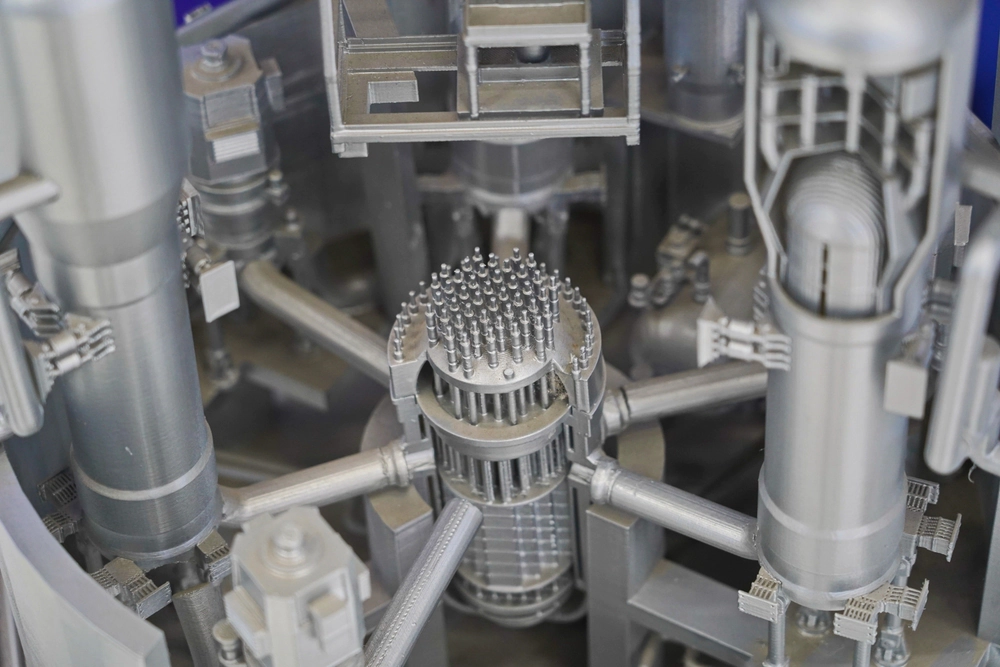
SMRs are nuclear fission reactors designed to generate significantly less power than traditional gigawatt‑scale plants, typically up to around 300 megawatts per unit, although some SMR designs exceed this threshold.
The key distinguishing feature is not simply size, but how SMRs are manufactured and deployed. Rather than large‑scale, bespoke construction on site, SMRs are designed to be largely factory‑built, with modules transported and assembled at their final location. Proponents argue that this approach offers:
- shorter construction times;
- greater cost certainty through standardisation; and
- the ability to deploy reactors incrementally to match demand.
From an energy‑system perspective, SMRs offer firm, low‑carbon power that can complement intermittent renewables, providing a stable baseload to the grid.
Why SMRs are back on the agenda
While SMRs have been discussed for decades, several converging factors have pushed them firmly into the mainstream.
- Geopolitical instability has exposed the risks inherent in fossil‑fuel import dependence. The Iran conflict is the most recent and acute example, but it follows earlier supply shocks linked to Russia’s invasion of Ukraine and wider instability in global gas markets.
- Electricity demand is rising sharply. The expansion of data centres, the electrification of transport, and the rollout of heat pumps all require reliable baseload generation alongside renewables. Nuclear power, unlike wind or solar, is not weather‑dependent.
- UK energy policy has shifted. The Government is now explicitly pursuing a “fleet‑based” approach to new nuclear, recognising that repeatable, standardised deployment offers lower risk and better value than one‑off mega‑projects.
The Rolls‑Royce SMR programme
The most significant recent development in the UK SMR landscape is the Government’s decision to proceed with Rolls‑Royce SMR as its preferred technology partner (A new dawn for nuclear: UK Government backs Sizewell C and Rolls-Royce SMRs | Foot Anstey).
In April 2026, Great British Energy Nuclear signed a contract with Rolls‑Royce SMR to begin detailed design work for the UK’s first SMR projects, formally moving the programme from competition into delivery. The current plan envisages an initial fleet of three reactors at Wylfa in North Wales, with potential for further units as the programme scales.
This decision is notable for several reasons:
- it represents the first concrete step toward commercial SMR deployment in the UK;
- it signals long‑term Government commitment, backed by multi‑billion‑pound funding allocations; and
- it positions the UK as a potential exporter of SMR technology, with parallel projects already under development in the Czech Republic.
From a legal and commercial standpoint, this marks a transition into a new phase involving planning consent, regulatory approval, supply‑chain contracting and long‑term offtake arrangements.
The Rolls-Royce SMR programme means a major boost for the UK's energy security, economic growth and net-zero goals.
Will SMR deployment increase in the future?
Momentum is clearly building, but significant challenges remain. On the enabling side, recent reforms to nuclear planning policy are intended to remove historical constraints on siting and allow SMRs to be co‑located with existing nuclear or industrial infrastructure. The UK’s Generic Design Assessment (GDA) process (the process used by the ONR, the Environment Agency and Natural Resources Wales to assess the safety, security and environmental viability of new nuclear designs) is also progressing, with Rolls‑Royce SMR the furthest advanced of the European contenders – reportedly 18 months ahead of its competitors.
On 21 May 2026, the Government announced that it will introduce legislation to fast-track clean energy (including nuclear) projects by enabling Parliament to designate projects as being of critical national importance. The intention is that this designation would restrict the use of judicial reviews against such projects, to remove a historically significant hurdle for projects of this type.
However, timelines are long. Even with political support, the first power from UK SMRs is unlikely before the mid‑2030s. Financing structures, waste management, public acceptance and grid connection all remain live issues. Parliament has previously cautioned against excessive optimism, noting that cost reductions from modularity are not yet proven at commercial scale.
Internationally, the picture is similar. Only a handful of SMRs are operating worldwide, but interest is accelerating as governments reassess energy sovereignty in light of geopolitical risk.
A strategic moment for UK energy
The resurgence of nuclear power (and SMRs in particular) should be seen less as a technological silver bullet and more as part of a broader recalibration of energy strategy. The geopolitical situation has underlined that energy policy is inseparable from national security, industrial strategy and economic resilience.
For developers, investors and infrastructure partners, SMRs present opportunities alongside complex regulatory and commercial considerations. For government, the challenge will be maintaining policy clarity and delivery discipline over a timescale measured in decades rather than electoral cycles.
What is clear is that SMRs have moved from a theoretical concept to a practical proposition. With Rolls‑Royce SMR now entering the delivery phase, the UK’s approach to energy self‑sufficiency and the legal frameworks that support it are entering a decisive period.
Our full-service, multi-disciplinary team of nuclear energy lawyers advises and supports clients with achieving their aims across the full lifecycle of projects in the nuclear industry. Our specialist nuclear practice is built on the expertise and quality of our lawyers, coupled with our sector knowledge, which really sets us apart. Please do get in touch if you would like to discuss how our energy law team can support your business in this sector.
Get in touch

Partner
Head of Energy & Infrastructure | Projects, Infrastructure & Construction | Real Estate
Bristol


Associate
Commercial Energy | Energy & Infrastructure | Projects, Infrastructure & Construction
Bristol