Cutting red tape for renewable energy: What the Government’s wind turbine consultation could mean for rural landowners and charities

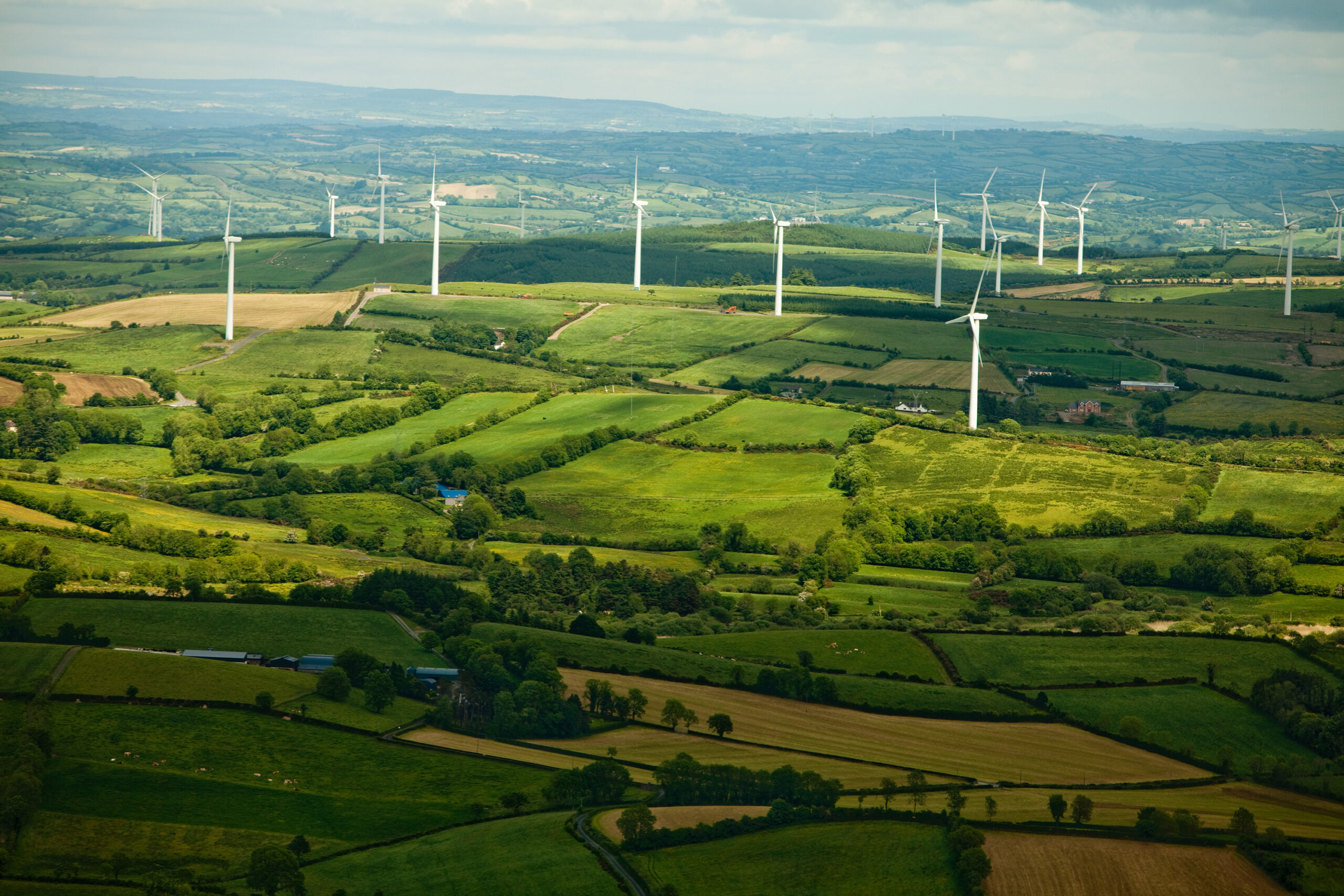
The government has launched a significant consultation which, if implemented, could meaningfully reshape the planning landscape for small‑scale commercial onshore wind development in England. The proposal centres on a new permitted development right (PDR) for small, non‑domestic wind turbines, designed to reduce planning barriers that have historically limited uptake.
For rural businesses, landed estates and landowning charities, this may open the door to new energy, resilience and revenue opportunities.
The Government Consultation, published by the Department for Energy Security and Net Zero (DESNZ) on 18 March 2026, remains open until 10 June 2026.
What is being proposed?
At the heart of the consultation is a proposed new permitted development right allowing a single small onshore wind turbine to be installed on non‑domestic land without the need for a full planning application, provided certain conditions and limitations are met.
Key proposals include:
- One turbine per site.
- A maximum height of up to 30 metres.
- Applicable to non‑domestic settings, including farms, commercial rural enterprises, estates and public sector land.
- Subject to noise, visual, siting and environmental restrictions.
- Exclusions for designated and sensitive locations such as National Parks, National Landscapes, conservation areas and the curtilage of listed buildings.
Although domestic turbines and community‑owned schemes are not included at this stage, the government has indicated it is seeking further views on longer‑term support for these models.
Why this matters for rural business' and landowning charities
Historically, small‑scale onshore wind in England has faced high upfront costs and planning uncertainty, with applications often delayed or refused following lengthy processes. The consultation explicitly recognises that the risk profile of full planning applications has deterred landowners from investing in wind, despite growing energy costs and net‑zero commitments.
For rural landholders and charities, the proposed PDR could bring several important benefits:
- Reduced planning risk and cost - Removing the requirement for a full planning application has immediate financial and operational implications. Planning fees, consultant reports, environmental assessments and appeal risks can make modest renewable projects uneconomic. A clear permitted development route creates certainty at the point of investment, allowing projects to proceed with confidence where conditions are met. This is particularly relevant for estate‑scale projects where energy generation supports core operations rather than export‑led commercial schemes.
- Energy cost savings and price stability - A single 30‑metre turbine can generate meaningful on‑site electricity, particularly when paired with existing solar or battery storage infrastructure. Government and industry commentary highlights the role of wind in providing winter and night‑time generation, complementing solar photovoltaic systems and reducing exposure to volatile grid prices. For charities and estates with significant energy demand across multiple buildings, even modest generation can translate into long‑term operational savings and improved budget certainty.
- Improved energy resilience for rural operations - Grid constraints remain a persistent challenge in many rural areas. On‑site generation can reduce reliance on increasingly stretched distribution networks and support operational continuity for land‑based enterprises, visitor attractions, tenanted estates and heritage properties (subject to constraints). This aligns with broader government objectives around energy security and decentralised generation.
- Supporting environmental and net zero objectives - Land‑owning charities and conservation‑focused organisations operate under increasing environmental expectations, both statutory and reputational. The proposed PDR supports the delivery of low‑carbon energy generation while retaining safeguards for landscape, heritage and biodiversity interests. Where turbines are sensitively sited, the proposals offer a mechanism for organisations to demonstrate leadership on climate commitments without compromising protected sites.
- Strategic opportunities for estates and trusts - For larger estates and charities, permitted development may enable incremental energy strategies, such as:
- Supplying estate‑wide operations from on‑site generation.
- Supporting diversification projects through reduced operating costs.
- Exploring power‑purchase arrangements within organisational structures.
- Enhancing long‑term asset resilience while maintaining planning compliance.
However, excluded areas, certification standards, buffer distances and prior approval requirements mean that careful legal and planning analysis remains essential, even where a PDR applies. There may be additional legal considerations that come into play when looking at the distribution and supply of electricity across a wider estate and/or multiple different tenants/businesses.
Key considerations before progressing
While the proposals are welcome, they do not remove all regulatory constraints. Issues requiring early assessment include:
- Site eligibility and designation restrictions.
- Visual impact and neighbour considerations.
- Noise standards and turbine certification.
- Landlord, tenant and charitable governance requirements.
- Grid connection (in the context of the ongoing grid connection reform) and contractual arrangements.
The consultation also leaves open the future position on repowering, multiple turbines and community energy, suggesting further reform may follow depending on stakeholder feedback.
Conclusion
The proposed permitted development right represents a potentially transformative shift for small‑scale onshore wind in England. For rural businesses, estates and land‑owning charities, it offers the prospect of lower costs, greater energy independence and reduced planning friction, while maintaining safeguards for sensitive landscapes and heritage assets.
Organisations considering future renewable energy investment may wish to engage with the consultation process and assess how the proposals could align with long‑term estate, environmental and financial strategies.
How can Foot Anstey help?
Foot Anstey has specialist advisors in rural and landed estates, charity property, planning and energy & infrastructure who can support business' and charities through all aspects of renewable energy projects. With the rising cost of electricity, questions around 'energy independence' are becoming more relevant than ever. Energy procurement is no longer an afterthought but a key question of a business' resilience and long-term strategy.

Managing Associate
Energy & Infrastructure | Projects, Infrastructure & Construction
Bristol