Crest Nicholson v Ardmore – a landmark TCC decision reshaping building safety risk, group liability and insolvency strategy


On 1 April 2026, the Technology and Construction Court (the "TCC") handed down its judgment in Crest Nicholson Regeneration Ltd and others v Ardmore Construction Ltd (in administration) and others [2026] EWHC 789 (TCC) ("Crest Nicholson v Ardmore"). The decision is one of the most significant Building Safety Act ("BSA") judgments to date, providing the clearest guidance yet on how and when the TCC will exercise its powers to make Building Liability Orders (“BLO('s)”) under sections 130–131 of the Building Safety Act 2022 (“BSA”).
For developers, contractors, funders and corporate groups across the construction and real estate sectors, the message is clear: historic building safety risk can no longer be contained within a single contracting entity, and traditional insolvency or restructuring strategies will not necessarily shield the wider group from liability.
Background to the dispute and the TCC's decision
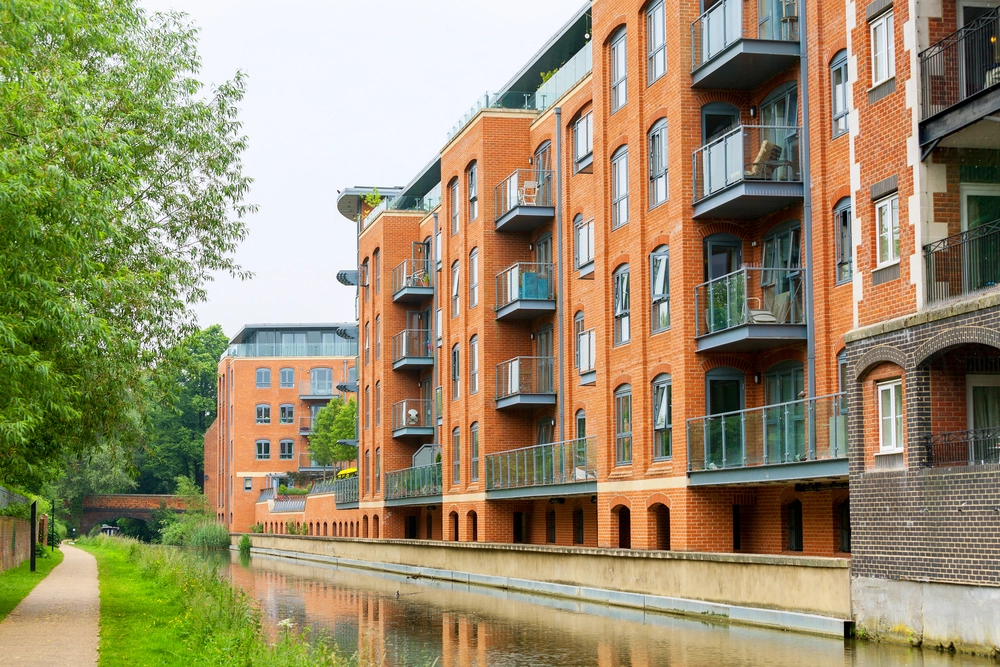
The proceedings arose from fire safety defects identified at Admiralty Quarter, a large residential development in Portsmouth constructed between 2007 and 2009. Ardmore Construction Ltd (“Ardmore”) acted as design and build contractor under a JCT Standard Form contract.
Following post‑Grenfell investigations, serious external wall fire safety defects were alleged. Crest Nicholson Regeneration Ltd ("Crest Nicholson") commenced adjudication proceedings, in which the Adjudicator found that the defects breached both Part B of the Building Regulations and Section 1 of the Defective Premises Act 1972. The Adjudicator awarded Crest Nicholson approximately £14.9 million. Ardmore entered administration the day before that decision was delivered, leaving the sum awarded unpaid.
Crest Nicholson applied to the High Court for two BLO's against companies within the wider Ardmore group:
- an “anticipatory” BLO, making associated companies jointly and severally liable for any liability that Ardmore might ultimately be found to owe; and
- an “adjudication BLO”, extending liability for the unpaid adjudicator’s award to those associated companies.
The TCC granted both orders sought by Crest Nicholson.
Anticipatory BLOs
For the first time in a fully contested case, the TCC confirmed that the BSA permits "anticipatory" BLOs which are orders made before liability has been finally determined at trial. The TCC held that this interpretation is consistent with both the statutory wording and the wider purpose of the BSA, namely ensuring that those responsible for historic building safety defects ultimately pay for remediation.
In assessing whether it was “just and equitable” to make such an order, the TCC placed particular weight on:
- the insolvency of Ardmore;
- evidence that the Ardmore group had restructured to isolate historic liabilities within Ardmore;
- the group’s long‑standing knowledge of the defects; and
- the TCC's high degree of confidence that Ardmore would ultimately be found liable at trial.
Adjudication awards as “relevant liabilities”
Perhaps the most eye‑catching aspect of the decision is the TCC's confirmation that an adjudicator’s decision - although temporarily binding - can amount to a “relevant liability” for the purposes of s.130 BSA.
The TCC rejected arguments that adjudication decisions are too interim in nature to be the basis for a BLO, holding instead that they create binding liabilities unless and until overturned, and that excluding adjudication would undermine both the adjudication regime and the objectives of the BSA.
Why this judgment matters
The implications of Crest Nicholson v Ardmore are far‑reaching and can be summarised as follows:
- Group‑wide exposure and restructuring under scrutiny. Associated companies can now face joint and several liability for building safety claims - even where they were not the contracting party. Lawful corporate restructuring may still be unwound if the TCC considers it “just and equitable” to do so in the context of building safety responsibility.
- Insolvency is no shield. Placing a delivery SPV or contractor into administration will not necessarily protect the wider group. Financial hardship will not prevent a BLO.
- Early intervention. BLOs can be granted before trial, and even on the back of an adjudicator’s award.
For developers, contractors, funders and asset owners, Crest v Ardmore highlights a number of critical risk areas that now demand early attention: historic developments constructed by insolvent or thinly capitalised entities; group structures where building safety liabilities may not be clearly contained; ongoing or contemplated adjudications that could trigger group‑wide exposure; and corporate restructurings that may be scrutinised through the lens of the “just and equitable” test.
We are able to advise clients on how to identify these risks early, stress‑test existing structures, and develop strategies that balance remediation, dispute resolution, funding and restructuring considerations. Our aim is not only to respond when issues arise, but to help clients make informed, commercially sound decisions that minimise the likelihood of unexpected liability cascading across their business or investment portfolio.
Get in touch

Partner
Energy & Infrastructure | Projects, Infrastructure & Construction | Real Estate
Bristol


Senior Associate
Building Safety | Energy & Infrastructure | Projects, Infrastructure & Construction
Manchester

Associate
Commercial Energy | Energy & Infrastructure | Projects, Infrastructure & Construction
Bristol