Electrification and the retail sector: From ESG aspiration to commercial necessity

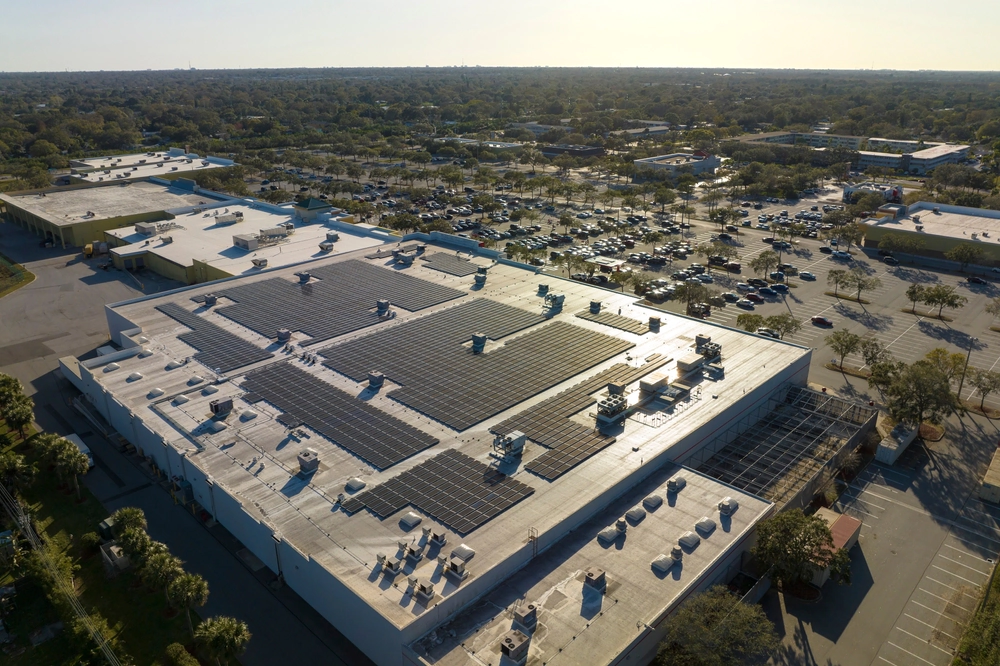
For retail and consumer businesses, electrification is no longer a future sustainability ambition. It is increasingly a present-day commercial necessity, driven not only by ESG signalling but by cost, resilience and risk management. The sector is in agreement that the transition to renewable electricity (and the wider electrification of heat and transport) is now a core business strategy rather than a discretionary environmental initiative. This shift reflects growing recognition that electricity costs are a material source of financial volatility that must be actively managed.
Putting theory into practice
Renewable electricity procurement, whether through renewable energy certificates, on-site generation, power purchase agreements (PPAs) or blended solutions, is increasingly paired with electrified heat, electric vehicle fleets and energy efficiency measures. Importantly, there is no single solution. Retail estates vary widely in scale, ownership structure and physical constraints, meaning that hybrid approaches are fast becoming the norm rather than the exception.
From a legal and governance perspective, this shift has significant implications. Retailers’ energy strategies are now directly linked to directors’ duties around long-term value creation and risk management. Decisions about whether, when and how to electrify influence exposure to future carbon regulation, operational disruption and asset stranding. For retailers, whose margins are often thin and highly sensitive to operating costs, electrification combined with on-site generation and battery storage provides both economic and operational protection. Storage also enables retailers to respond more actively to peak pricing and network constraints, reducing exposure to non-commodity charges and improving overall energy resilience.
Key barriers
However, significant barriers to deployment remain, particularly for the retail sector. The landlord-tenant split continues to distort incentives: tenants benefit from lower energy bills, while landlords often bear the capital costs of installing solar panels (often coupled with storage) or upgrading infrastructure. As a result, vast commercial rooftop potential remains untapped. Without improved commercial models or policy intervention, this market failure risks slowing electrification across large parts of the retail estate. At the same time, non-commodity costs now make up a substantial proportion of electricity bills, and a poor understanding of network charges can result in unnecessary upgrades or investment in over-capacity. Early engagement of legal and technical advisers is therefore critical – not as an afterthought, but as a foundational element of energy strategy.
At the same time, the regulatory landscape is evolving in a way that reinforces the commercial case for electrification beyond retailers’ own operations. The UK Government’s introduction of a UK Carbon Border Adjustment Mechanism (UK CBAM) from 1 January 2027 will impose a levy on certain carbon-intensive imported goods (including steel, aluminium and cement) based on their embedded emissions and the differential between UK and overseas carbon pricing.
While retailers are unlikely to be direct CBAM taxpayers in most cases, the impact will be felt across supply chains. Many retail products and store fit-outs rely, directly or indirectly, on materials within scope of the regime. As a result, higher-carbon imports are likely to become structurally more expensive, introducing additional cost pressure and variability into procurement decisions. Suppliers will increasingly be required to provide reliable emissions data, and their ability to demonstrate lower-carbon production – often through electrification and renewable energy use – is likely to become a key competitive differentiator.
From a legal perspective, this introduces a new layer of complexity. Retailers may need to revisit supply contracts to address carbon cost pass-through, data reporting obligations and risk allocation for CBAM-related liabilities. There is also likely to be greater alignment between operational decarbonisation and procurement strategy, as businesses seek to manage both direct energy costs and the indirect carbon costs embedded in their supply chains.
Clear direction of travel
For the retail and consumer sectors, the direction of travel is clear. Electrification is not a peripheral sustainability project; it is a fundamental reshaping of how energy is sourced, priced and governed – both within businesses and across their supply chains. The legal challenge is to ensure that contracts, property structures and governance frameworks evolve quickly enough to support that transition, before volatility, regulation and infrastructure constraints do it instead.
Get in touch

Managing Associate
Energy & Infrastructure | Projects, Infrastructure & Construction
Bristol