How Intellectual Property law is evolving: from Luke Littler to Jo Malone


A series of recent intellectual property (IP) disputes have captured headlines across sectors, highlighting the increasingly complex landscape facing brand owners. From hospitality and fragrance to entertainment and food, these cases may differ on their facts, but they converge on familiar legal fault lines: reputation, consumer confusion and the ever-expanding boundaries of goodwill.
Taken together, they offer a snapshot of how IP law is evolving, shaped not only by legal doctrine but by culture, commerce and creativity.
Premier Inn v Insomnia Cookies
Premier Inn has brought proceedings against late-night dessert chain Insomnia Cookies, alleging trade mark infringement and passing off in relation to Insomnia’s crescent moon and stars branding.

Premier Inn’s long-standing logo, a stylised moon and stars, has become synonymous with “rest easy” messaging and overnight stays. Insomnia Cookies also trades on nocturnal themes with its moon formed from a bitten cookie.
While the imagery is not identical, Premier Inn argues that the shared celestial motifs risk implying a commercial link, particularly given both brands’ association with night-time consumption.
At its core, the dispute raises an important question, how far can a brand monopolise evocative, thematic imagery that is arguably intrinsic to its sector? The case may offer useful guidance on where conceptual overlap ends and legal similarity begins.
Estée Lauder v Jo Malone
Having sold Jo Malone London, along with assigning away the rights to her name in connection with fragrance, in 1999, Malone now faces claims of infringement, passing off and breach of contract from Estee Lauder. The issue arises from a Zara collaboration under her newer brand, Jo Loves, which includes the wording “A creation by Jo Malone CBE, founder of Jo Loves.”
Malone has publicly framed the issue as one of identity versus ownership. Estée Lauder, however, maintains that the earlier assignment gives it exclusive rights to the name in the fragrance space,
and that Malone's use risks consumer confusion and undermines decades of goodwill built up in the “Jo Malone London” brand.
The case is a stark reminder that where rights in a personal name are contractually assigned , the legal consequences can be enduring and may resurface long after the original deal fades from memory, potentially restricting even the original individual’s ability to commercially refer to themselves in that sector decades later.
Luke Littler applies to Trade Mark his face
Teen darts sensation Luke Littler has taken an unconventional approach to brand protection by applying to register his facial image as a UK trade mark.
Unlike names or logos, faces present a unique challenge. To qualify, the image must function as a badge of origin rather than merely a representation of a person. Littler’s move reflects a broader trend among public figures seeking to compensate for the UK’s lack of formal “image rights” through creative IP strategies.
Whether the UKIPO accepts the application remains uncertain, but the attempt itself signals a shift In a world of deepfakes, digital merchandising and AI replication, identity is increasingly being treated as intellectual property.
Taylor Swift v Swift Home
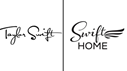
Taylor Swift’s brand management company has successfully opposed a US application for “Swift Home,” a bedding and homeware brand.
Although “swift” is a common word, the dispute centred on the applicant’s stylised cursive logo, which closely resembled Swift’s distinctive signature branding. With existing trade mark protection covering home textiles, the overlap proved too great.
The applicant ultimately abandoned the mark, a reminder that for well-known brands, protection often extends beyond words to encompass visual identity and implied endorsement.
Pond v Bond
An attempt to revive the cult 1990s video game character James Pond has run into opposition from Danjaq LLC, the owner of the James Bond intellectual property.
While James Pond has long been understood as parody, UK trade mark law does not recognise parody as a standalone defence. As a result, the case raises nuanced questions about how humour, homage and brand reputation interact within the legal framework.
Given the exceptional reputation associated with the Bond franchise, the outcome may help clarify how far parody can stretch before it becomes infringement.
Oatly’s ‘Illegal’ Merch
After the UK Supreme Court ruled that “POST MILK GENERATION” could not be used for oat-based products, Oatly adopted a characteristically irreverent response, distributing free merchandise bearing the now-“illegal” slogan.
While the ruling prevented use on food and drink, the mark remained valid for clothing. Oatly seized on that distinction, transforming a legal setback into a marketing win.
It is a neat illustration that adverse rulings do not always spell brand defeat and that creative strategy can turn legal limits into cultural capital.
Pedro Pascal v Pedro Piscal
Actor Pedro Pascal has launched legal action in Chile against a pisco producer operating under the name “Pedro Piscal.”
Pascal argues that the phonetic and visual similarity unfairly trades on his reputation and creates confusion. The producer, however, maintains the name is derived from the Pedro Jiménez grape and the word “pisco,” and points to local precedent where celebrity claims have not always succeeded.
The dispute underscores the territorial nature of IP rights, particularly in jurisdictions where image rights are less developed. As ever, the key issue is where wordplay ends and commercial exploitation begins.
IKEA x Chupa Chups
Not all brand stories are born in conflict. IKEA has demonstrated the flip side of brand power, turning attention into opportunity.
What began as an April Fools’ joke, a meatball-inspired lollipop, is now becoming a global activation through a limited-edition partnership with Chupa Chups. Around one million lollipops will be distributed free during in-store events across hundreds of locations.
The confection playfully reimagines IKEA’s iconic meatball and lingonberry combination, tapping into consumer appetite for novelty, nostalgia and experience-driven retail. For IKEA, it reinforces brand identity; for Chupa Chups, it offers a creative collaboration tied to a globally recognisable food icon.
The move highlights an important point that not every brand moment is defensive. Sometimes the most effective use of IP is as a platform for engagement rather than enforcement.
Final thoughts
These stories collectively reinforce a central lesson, trade marks are not static assets. They evolve alongside technology, consumer perception and cultural context.
Whether the issue is celestial logos, personal names, parody characters or AI-generated likenesses, the boundaries of protection are constantly being tested. At the same time, brands are finding increasingly inventive ways to use their IP, not just to litigate, but to connect.
For businesses and individuals alike, the challenge is clear, navigate the line between inspiration and infringement carefully and, where possible, turn risk into opportunity.
Get in touch

Principal Director - Chartered Trade Mark Attorney
Intellectual Property | Charities
Exeter

CITMA Qualified Paralegal
Anti-counterfeiting | Design Rights | Intellectual Property
Bristol