Partner
Energy & Infrastructure | Projects, Infrastructure & Construction | Real Estate
This website will offer limited functionality in this browser. We only support the recent versions of major browsers like Chrome, Firefox, Safari, and Edge.

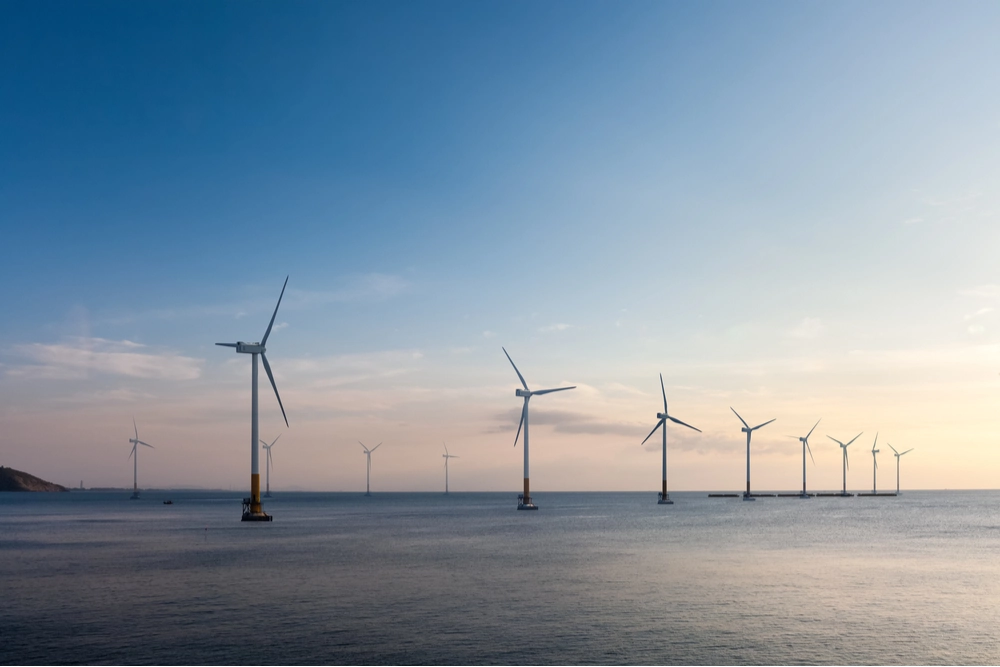
The seventh allocation round ("AR7") under the Government's Contracts for Difference ("CfD") scheme was announced on 14 January 2026, demonstrating that the UK has real ambitions for offshore wind. With AR7 securing 8.4GW of offshore wind capacity, a new European record has been set for offshore wind procurement. The Government considers it an "historic win" for UK energy independence.
The consensus is that RWE can be considered the real winner of AR7, securing almost 7GW of the capacity on offer (across its Norfolk Vanguard East and West, Dogger Bank South East and West and the Awel y Môr projects) and SSE secured around 1.4GW for its Berwick Bank Phase B project. Aside from these fixed-bottom projects, approximately 192MW was granted to the Erebus (100MW) and Pentland (92.5MW) floating offshore wind projects situated in the Celtic Sea and off the north of Scotland, respectively. This might not seem like much in the grand scheme of things, but this is significant, as it reflects a desire to invest in a technology which is still in its early stages, yet has the potential to deliver strong results once fully commercialised.
The allocation round has mostly been seen as positive across the offshore wind sector and there can be little doubt that it's an important step towards the Government's Clean Power 2030 goals. Following previous rounds which left the market feeling a little downhearted about the future, this round demonstrates to the industry that the UK still means business in the sector.
AR7 saw a number of differences compared to previous allocation rounds. Most notably perhaps was the extended lease periods, increasing from 15 years to 20 years in the hope that this will offer more certainty to developers and investors.
The strike prices were also updated. Unlike in previous allocation rounds where the strike price had been set based on 2012 money, AR7's strike prices were based on 2024 levels. This meant that fixed-bottom offshore wind cleared at circa £91.20/MWh in England and Wales, while floating wind cleared at £216.49/MWh.
For context, the "strike price" is the guaranteed revenue level per MWh paid to generators. When wholesale prices fall below this level, the CfD tops up revenue and when they rise above it, generators pay the difference back. This helps stabilise long-term costs for both developers and consumers.
AR7 is impressive both for the capacity secured, but also for its budget. The Government nearly doubled fixed bottom offshore wind support from £900 million to £1.79 billion going into the round, making this the highest offshore wind auction budget ever seen in Europe. This increase means that the UK has been able to position itself as a global leader in the sector, particularly in light of the current US market approach and delivery failures in recent years in Europe.
The Government is expecting the amount of energy generated from this round to power between 10 and 12 million homes, which in turn should unlock £22 million of private investment. This will be significant in the changing energy mix within the UK. In addition, the work involved in turning the AR7 into reality will generate in the region of 7,000 jobs.
Although the amount of capacity retained for floating offshore wind is more limited, it nonetheless demonstrates a commitment by Government to utilising all key technology in reaching its clean energy targets. Floating offshore has the capacity for higher energy generation due to more consistent wind power further out at sea. The technology to support floating offshore projects remains in its fairly early stages and the wind sector is calling for its commercialisation in order to accelerate to where the Government wants to be by 2030 and beyond, so it is positive to see two projects featuring in AR7.
The round has also delivered an encouraging picture for Wales with one fixed-bottom project aimed at delivering 775 MW and the 100MW Erebus floating wind project. This will be a welcomed sign of investment in the region and a show of support for Wales's capabilities in the offshore wind space.
The allocation round has delivered strong results across the UK, showing real Government commitment to its CP2030 targets, particularly in light of the failing AR5 round which featured no offshore projects at all.
This allocation round is important at a time of global uncertainty and a rapidly-changing geopolitical landscape. Despite strong opposition to the wind sector in the US from the Trump Administration and concerns closer to home with the possibility of policy reversals under a Reform government, the UK Government has stood its ground in terms of what it intends to deliver on the renewable energy front. This will be welcomed by the businesses operating in this space – from developers to those in the supply chain trying to work out how best to position themselves for the future.
AR7 does not ensure that the CP2030 will be met, but it is a big step in the right direction. The Government will need to continue building on this momentum over the years to come to keep the UK at the forefront of offshore wind development and continue to position the country as a sound place to invest in renewable energy.
Partner
Energy & Infrastructure | Projects, Infrastructure & Construction | Real Estate