The Harcourts: A story of family succession

Planning family wealth
At Foot Anstey, we understand that planning for the future of family wealth is rarely straightforward. Modern families often balance a mix of business interests, property, investments, and personal relationships, alongside evolving tax rules and legal considerations. In this series, we use the fictional Harcourt family to illustrate these issues in a practical and relatable way. Through their story, we explore the practical challenges of intergenerational planning, from succession and asset protection to diversification, dispute risk and changing tax landscapes. Our aim is to provide clear, accessible insights into the decisions families face, while showing how thoughtful, joined-up advice can help protect what matters most.
The fictional Harcourt family
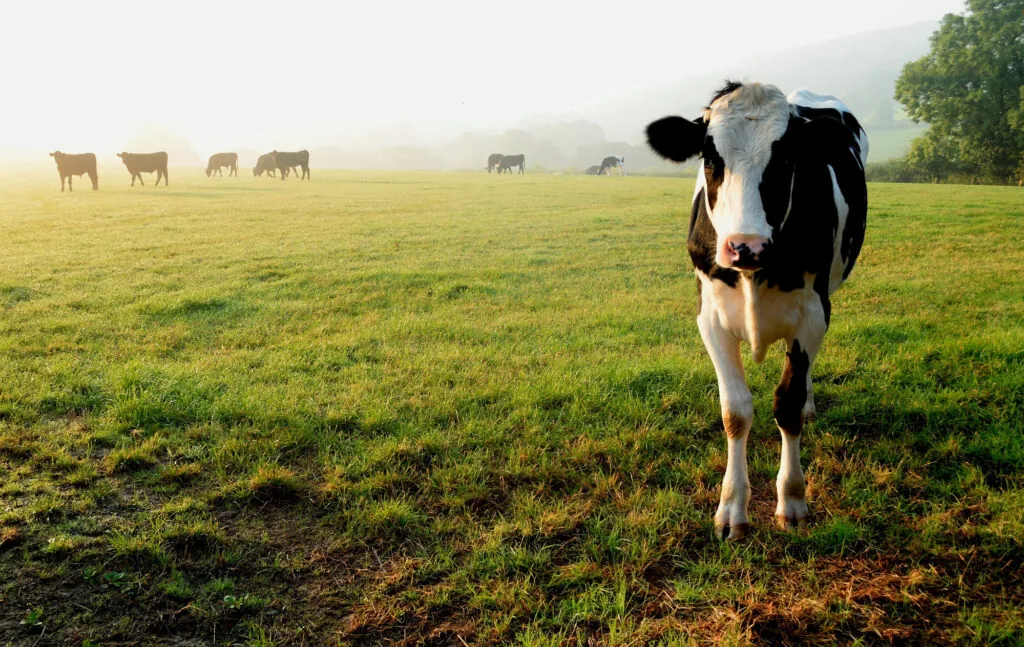
The Harcourt family is a fictional family created for the purposes of this article series. Richard Harcourt married Eleanor Harcourt in 1978 and subsequently inherited Harcourt Farm in Somerset in his late thirties. At that point, the holding comprised approximately 300 acres of dairy land operated as a family farming business. Over the following decades, Richard expanded the landholding to around 850 acres, materially increasing both the scale and value of the farming operation.
In addition to land, trading businesses and investment assets, the Harcourt family holds a collection of artworks and historic objects accumulated over several decades. Some items have been displayed at Harcourt Farm, while others are held in storage or loaned periodically for exhibition.
Richard and Eleanor have also built up significant pension provision, primarily through a combination of occupational pension schemes, SIPPs and retained profits invested over time. While these arrangements were initially intended to fund retirement, they now form an important part of wider estate planning discussions, particularly given the 2027 changes to the tax treatment of pension wealth on death.
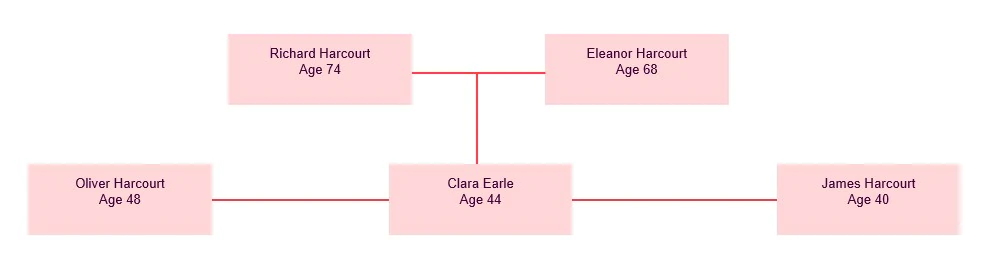
Now in his seventies, Richard’s health is declining, and the family faces difficult decisions about the future of the farm and its assets. Richard and Eleanor have three adult children: Oliver, Clara, and James, who are all married and have children.
Disposal of land
As part of longer‑term planning for the farm, Richard sold 120 acres of land for residential development. The disposal generated substantial liquidity but also triggered immediate and longer‑term tax considerations, including Capital Gains Tax exposure on development land and reduced availability of Agricultural Property Relief for IHT purposes.
The sale proceeds were used to fund a programme of diversification and restructuring. Some capital was reinvested into the core farming operation, while other elements were allocated to non‑agricultural ventures and environmental initiatives.
A period of diversification
In recent years the family have looked to diversify away from traditional farming. Clara launched Harcourt Living Limited, a rural lifestyle brand offering glamping and eco-tourism. Clara’s success came with personal complications. Her separation from her husband raised questions about pre-nuptial agreements and protecting farming assets during divorce.
Having taken advice on the tax implications, the family began rewilding 100 acres to create biodiversity credits for future environmental markets.
A family trust and dispute over its management
In 2014, Richard and Eleanor Harcourt gifted a parcel of farmland with development potential into the Harcourt Family Discretionary Settlement. The structure was intended for long‑term wealth preservation. Richard and Eleanor appointed their daughter Clara and their son James as trustees, with a wide class of beneficiaries including the settlors’ children, grandchildren and future descendants.
Richard and Eleanor prepared a non‑binding Letter of Wishes expressing a preference that, if the land were sold, the proceeds should be applied towards the grandchildren’s education, while acknowledging that all decisions remained for the trustees. As settlors, Richard and Eleanor retained no control over the asset once gifted to the Trust.
A dispute has now arisen. Clara and James propose to sell the land and use the proceeds to invest in their respective business ventures. Oliver, a beneficiary, opposes an immediate sale. He considers that the land’s proximity to a Local Plan allocation means its value is likely to increase significantly and questions both the commercial and tax rationale of selling now.
Farm Succession Planning
Years later, Eleanor inherited £4 million, prompting the family to consider a Family Investment Company as a way of protecting and passing wealth to future generations.
At the same time, a changing tax landscape brought fresh challenges. Reforms to Agricultural Property Relief (APR) and Business Property Relief (BPR), frozen personal allowances and higher dividend tax rates all increased pressure on the family's finances. As Oliver remained committed to the farm, it became crucial to ensure that the farming partnership arrangements were clear, evidenced in formal agreements and suitably structured to provide the maximum protection and flexibility in light of the change to the inheritance tax landscape. What had always seemed a straightforward transition suddenly raised questions around asset ownership, succession and the potential SDLT implications of transferring land and assets.
Get in touch

Principal Director
International Succession & Tax | Owner Managed Businesses | Private Wealth